Every Camper Needs a Champion (And a System That Backs Them Up)
If you’re an educator, you’ve probably had a charismatic kid who could talk staff into almost anything.
I had a camper like that. He was able to convince kitchen staff to get him the extra dessert and to convince my younger counselors to let him hang back during activities. He was smart and picked up on staff dynamics, particularly when they would talk about their days off around him. The youngest counselors started treating him almost like a little brother or a junior counselor. What they didn’t always see was other campers never got any of these privileges.
At some point I had to stand up at a staff meeting and say “this camper is not a staff member. He is not your friend. He is a camper.” I remember the room getting quiet, uncomfortable. I also remember a staff member relaying that I said that to the same camper, unintentionally illustrating my point. I was frustrated, yes, but also realized that my staff had made an all too common error. They confused making a kid feel special with actually championing them. They confused poor boundaries as “being friendly” and failed to see the impact on other campers. It’s an easy mistake to make for sure, as some campers are just easier to work with, talk to, and manage.
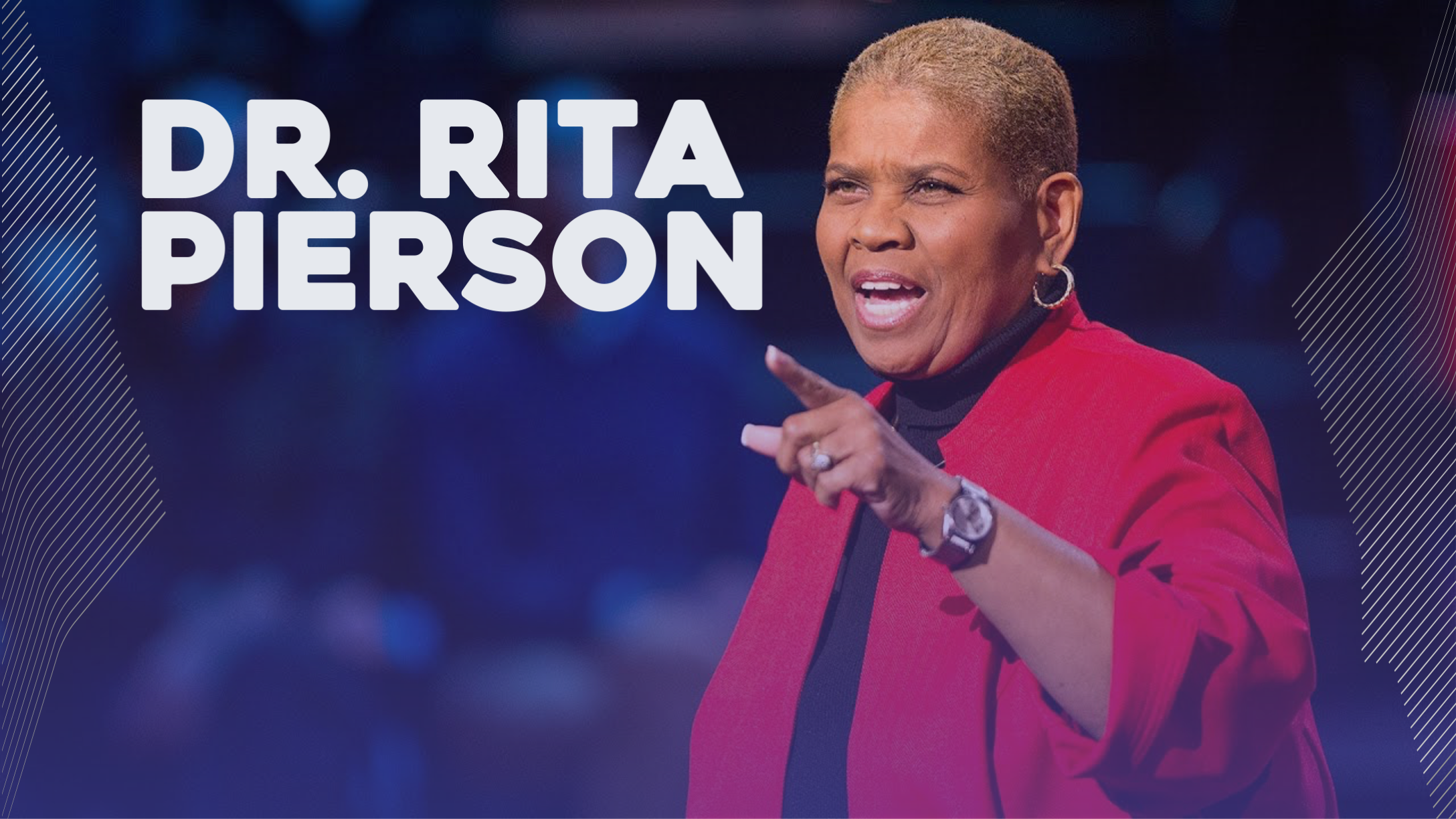
I believe firmly in Dr. Rita Pierson’s message that every kid needs a champion. I’ve also learned that some kids get many champions and some, no champions. There’s a gap between the inspiration and the implementation. If you really believe every kid deserves a champion, you have to align the staff, culture, and systems to make it happen. If you sit back and wait for it, it’ll never come.
The Problem: We’re Hearing Dr. Pierson Wrong
You might be familiar with the late great Dr. Rita Pierson’s famous TED talk, “Every Kid Needs a Champion.” Viewed nearly 17 million times, it has been the backbone of trainings and has inspired countless educators. If you’re not, you should check it out. It’s about 8 minutes all together. One of her last quotes really hits hard:
"Every child deserves a champion, an adult who will never give up on them, who understands the power of connection, and insists that they become the best that they can possibly be."
Those are inspiring words and they helped me push myself in my first few years as a teacher in New York City. However, as I moved out of teaching and into administration and leadership, my views on it started to get more nuanced, particularly as I spent some time in teacher subreddits that were so frustrated by the video. Countless messages mentioned it was shown at a teacher PD and teachers were just supposed to do more and build relationships, as if they already weren’t doing that.
I began to wonder if we’re hearing her message wrong.
It seemed like we expected staff to watch it and be better, or at least more inspired. We made it personal and all about them, ignoring the conditions they were working in. When they struggled we didn’t ask “what support did they need” we asked “should we have hired them in the first place.” We made supporting and championing kids a character trait you either have or you don’t. It became about finding magical people who were just good with kids, and if someone wasn’t, they just didn’t care enough or weren’t cut out for the work.
We shouldn’t be making it personal and waiting for superheroes to show up. We don't need to keep showing people TED talks and hoping they'll be inspired and just work harder. We need to build the structures that make championship sustainable, especially with limited budgets, seasonal staff, and seemingly increasing behavioral issues.
The question isn’t “where do I find these champions?” Instead it is “How do I build the conditions to create champions, summer after summer?”
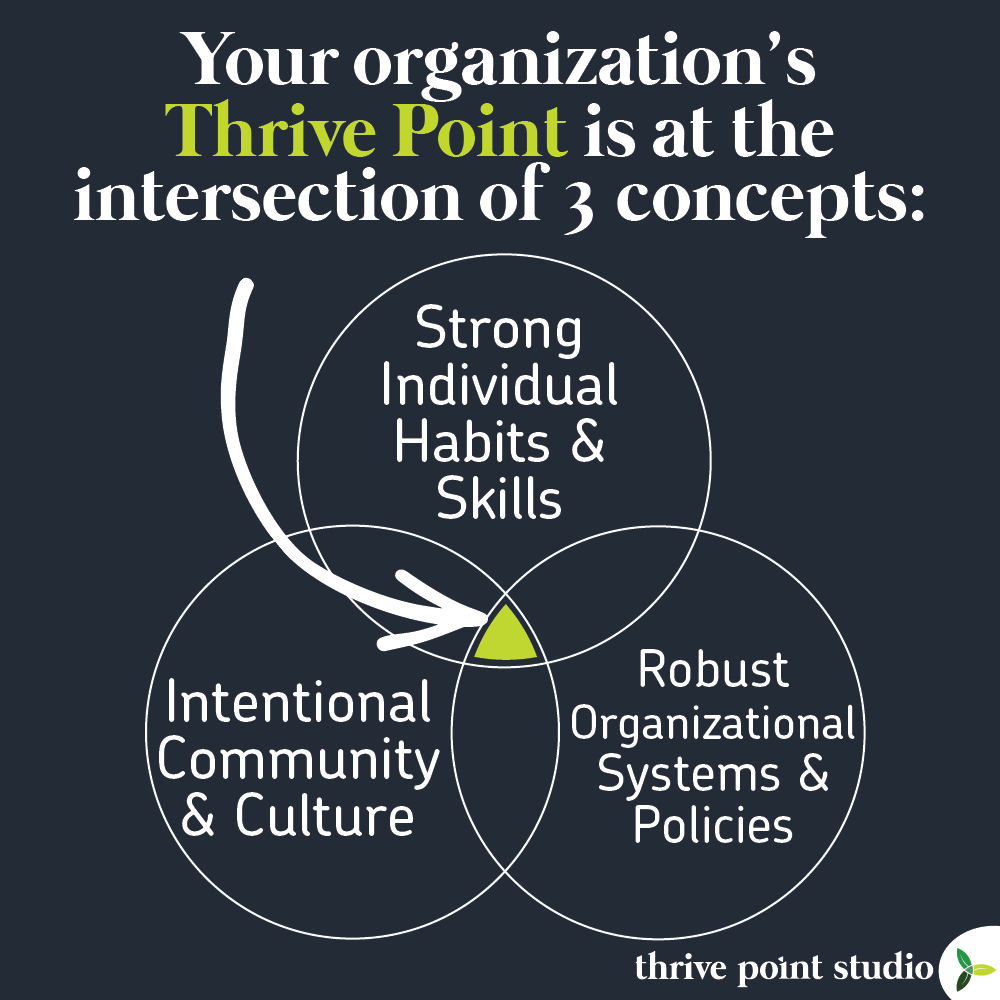
The answer is the Thrive Point Model.
The 3 Conditions for Championship
The Thrive Point Model has three concepts: effective staff, intentional culture, and robust systems. The center is where organizations thrive and make staff into champions, summer after summer.
Concept 1: Skilled & Effective Staff to be Champion
The staff you hired probably (hopefully) like kids. Relationships are everything when it comes to supporting and managing campers. However, I’ve always asked the question “what do you do hour 1 when a camper misbehaves and you don’t have a relationship yet?” That’s where specific, trainable skills are needed. While caring and connection is important, it isn’t enough to ensure effective championship. It is enough if we’re talking just friendship, but the relationship between camp and staff is more nuanced and closer to a teacher/student relationship. The best teachers use specific “teachers moves” in addition to building relationship. You need to train your staff on both responsive and preventative behavior techniques such as:
The Ladder of Action – a series of escalating responses to unwanted behaviors without yelling
How to give clear directions – so much of unwanted behavior is kids not know what we actually want from them
Setting up clear and robust routines – Effective routines go a long way in reducing unwanted behaviors because kids know what is expected
These are just a few of the many techniques staff should know that preserves the dignity of the child and helps redirect them back to the fun of camp. When staff aren’t yelling at kids, they have room to champion them.
Concept 2: Intentionally Built Culture that Supports Championship
One of camp's superpowers is the reset. Your culture cycles yearly, giving you a fresh opportunity to reinforce what's working and change what isn't. Most organizations don't get that.
But culture will happen whether you plan it or not. When you don't intentionally design it, staff fill in what they think should be there. That means your definition of championship gets made up on the fly, by different people, with different standards. Some staff will champion kids through deep connection. Others will champion kids by being their buddy. Remember my camper example. My staff didn't fail because they were bad people. They failed because our culture hadn't yet made it clear that championing a kid means holding boundaries, not just building a bond.
Culture is the combination of shared language, routines, and rituals that tell people "this is how we champion kids here." When your culture names that explicitly and reinforces it daily, staff don't have to guess. Skills can come and go as staff turn over. Culture is what keeps championship alive even when the person who brought it leaves. A great camp culture makes championing every kid the easiest and most natural path, and that pull does more work than any single superhero ever could.
Concept 3: Robust Systems That Make Championship Sustainable
As leaders, we have be to think about not just the individuals, not just the team, but the systems that support those two groups. Systems are what let us replicate that magic time after time with different staff and different kids.
Your systems are your written policies and procedures and routines that guide the work. These are the things that you keep coming back to, like your mission and values as well as things like your Emergency Action Plan. It isn’t a well-crafted, meticulously bullet pointed binder that, let’s face it, your staff rarely read. Instead it’s a series of policies and practices that reinforce culture and skills.
Sometimes when I say systems I got blank stares. I get folks who say “naw I want to focus on the kids” or “things are fine, we just keep on keeping on.” They’ll say "systems" sounds too bureaucratic, that it’s the opposite of that camp magic. However, for every kid to have a champion, a near impossible ask, we need the systems. Systems are like the infrastructure for organizations. Like roads, airports, power, we need to invest in the “soft” infrastructure of organizations success. Good systems are to organizations like good habits are to individuals.
In the case of Championing kids, you need to create policies and procedures that make this happen. There are two systems we built to make sure every kid was seen and responded to:
The Behavior Board: A daily leadership meeting that catches kids when they're struggling and tracks who is responding.
The Lost Camper Exercise: A weekly exercise where staff track which campers they've had meaningful interactions with. The data would reveal the kids who got all the attention and the kids who never got any attention at all.
The key to these systems were that they didn’t’ replace the caring relationships our staff had with campers. That’s essential. Instead, they reveal where our caring had blind spots.
Championing Staff
Up to this point I’ve been talking about championing campers. However, if you’re reading this it’s likely you are not line-staff anymore managing campers directly. Instead, you’re probably managing the staff who are managing the campers. Through the years I’ve learned everything I’ve mentioned also works for championing staff too. If we’re not intentional the same patterns show up – the loud, charismatic staff tend to get noticed and promoted. The quieter ones tend to fade into the background.
At our mid-summer check-ins, I'd ask our leadership team: "Who have you had a real conversation with this week? Not about logistics or problems, instead about how they're doing, what they're learning, what they need."
The results looked exactly like the camper data. The outgoing counselors who were crushing it had everyone checking in with them. There were always a few, usually quiet first-years who weren't causing any problems who barely anyone had talked to.
So we assigned them champions. Someone on leadership whose job it was to check in, to notice, to advocate for them. We saw retention and performance improve summer after summer, including recruiting and retaining a diverse staff. My first summer staff of color accounted for about 10% of my staff. By my last summer, it was almost half. You need to take care of staff so they can take care of your kids.
Common Mistakes when Building Championship Culture
There are a few mistakes I’ve seen though the years you should avoid as you look to improve your organization and create a space were all kids are championed:
Showing the TED talk and saying "be like Rita" without giving tools. While it feels like you might be inspiring them, you are likely y setting them up for failure instead.
Defining championship so vaguely that staff default to being a kid's friend. Championship is clear about what staff are to kids rather than friends. Boundaries are essential, and kids will never ask for them.
Relying on hiring "the right people" instead of building systems that support everyone. I’ve been there, hoping to find the right unicorn for my organization. You can’t keep waiting for them. You need to lead the staff you have, not the staff you wish for.
Championing kids intentionally but leaving staff support to chance. It’s easy to focus on the kids since that’s why we’re in the industry. Staff are arguably just as important to support and champion, particularly considering many staff are “near adults” ages 12-21.
Building systems for struggling kids but not for invisible kids (the Lost Camper gap). The squeaky wheel gets the grease is an accurate adage, and it’s easy to simply keep responding to the largest fire. However, if you don’t’ have a system in place to find the invisible kids, you’ll end up having retention issues in the long run.
Practical Things You Can Do Tomorrow
Depending on your role, there are a few things you can do tomorrow to build champions in your organization:
For Directors: Run the Lost Camper Exercise this week. Have leadership list every participant they've meaningfully connected with. Find the gaps. Feel free to reach out and ask me how.
For Coordinators/Mid-Level: Look at your training plan. Count how many hours are "inspiration" vs. how many are "here's a specific skill to practice." Adjust the ratio.
For Line Staff/Supervisors: Pick one staff member you haven't checked in with this week. Don’t chat logistics, ask about how they're actually doing.
Concluding Thoughts
I love Dr. Pierson’s message. I’ve watched it countless times. While I wish it were so simple, truly championing kids takes systems, culture, and strong staff. Being championed ultimately isn’t about one magical moment or just one magical person believing in you (although one person can make all the different). It’s about being in a system that constantly creates the conditions for everyone to be seen, supported, and called to be their best selves. Your organization needs to focus on all three parts to be successful and ultimately thrive.
I delivered a version of this talk today in Virginia. If you want to go deeper on any piece of this, reach out. Building these systems is what I do. Next week we're getting into one of the most practical pieces of the championship puzzle: how to design consequences that actually teach something instead of just punishing
Be on the lookout for our complete blog on Natural Cycles and be sure to check out Pinterest for templates and more you can use in training!
We can help with your training. Feel free to reach out to us with your questions and follow us on LinkedIn, Instagram, and Pinterest! We’ll be able to help you solve your problems.
Interested in working with us? Sign up for a free 30-minute call to assess your systems and see how we can help.