
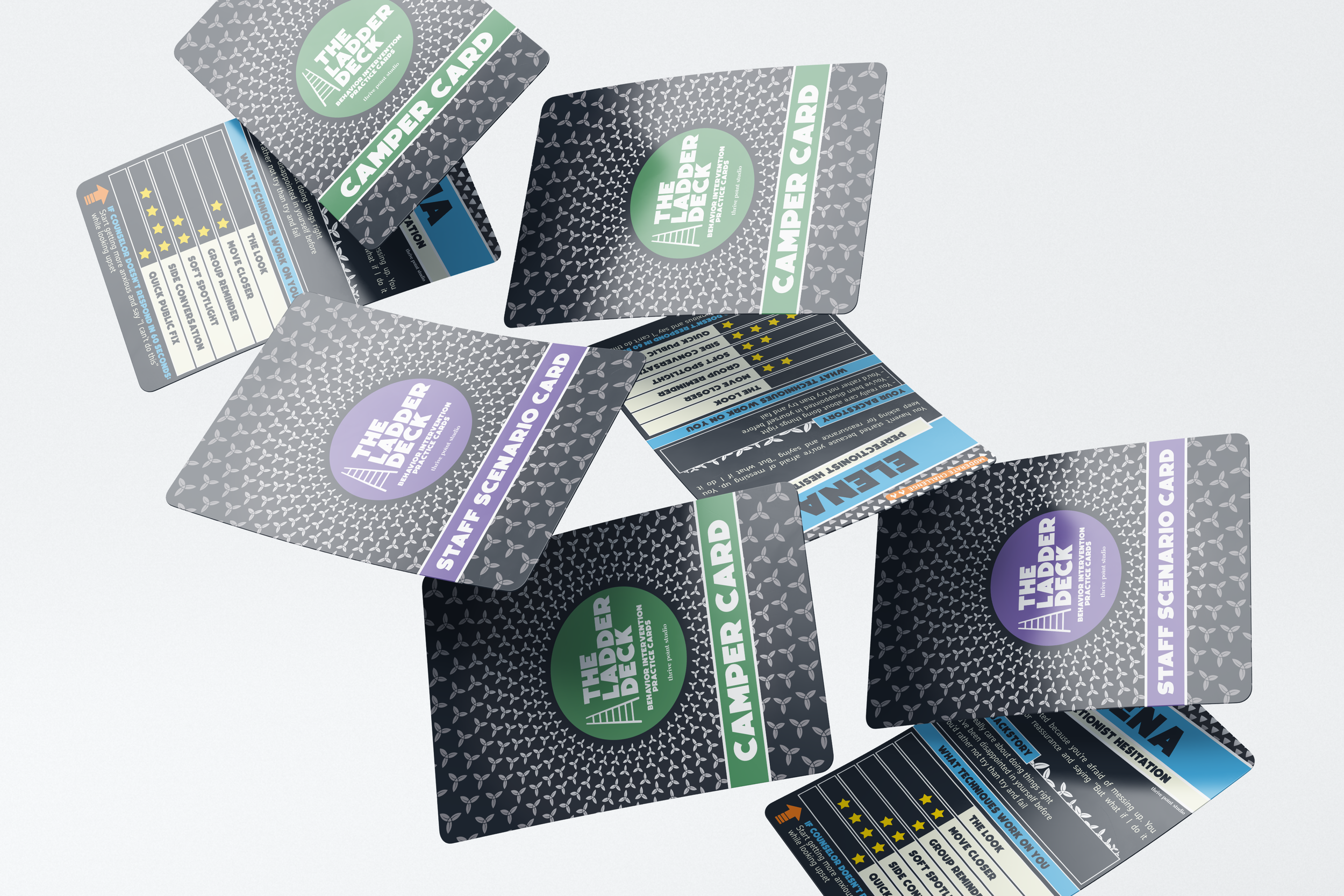
You do big and complicated things. Let us help.
I've trained hundreds of camp staff, and here's what I've learned: the counselors who struggle aren't the ones who don't care. They're the ones who never got a chance to practice.
Behavior Cards gives your team that practice.
What's inside:
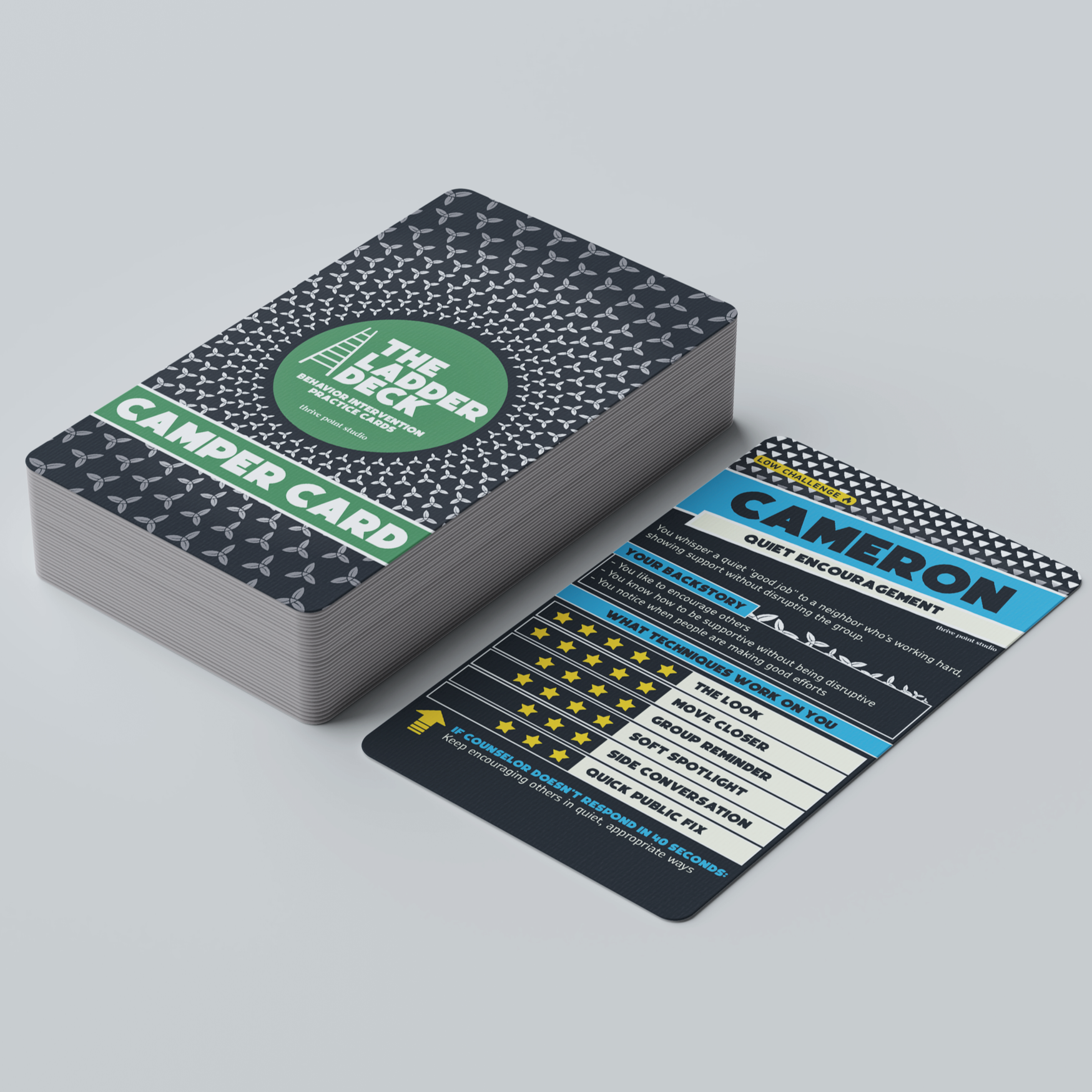
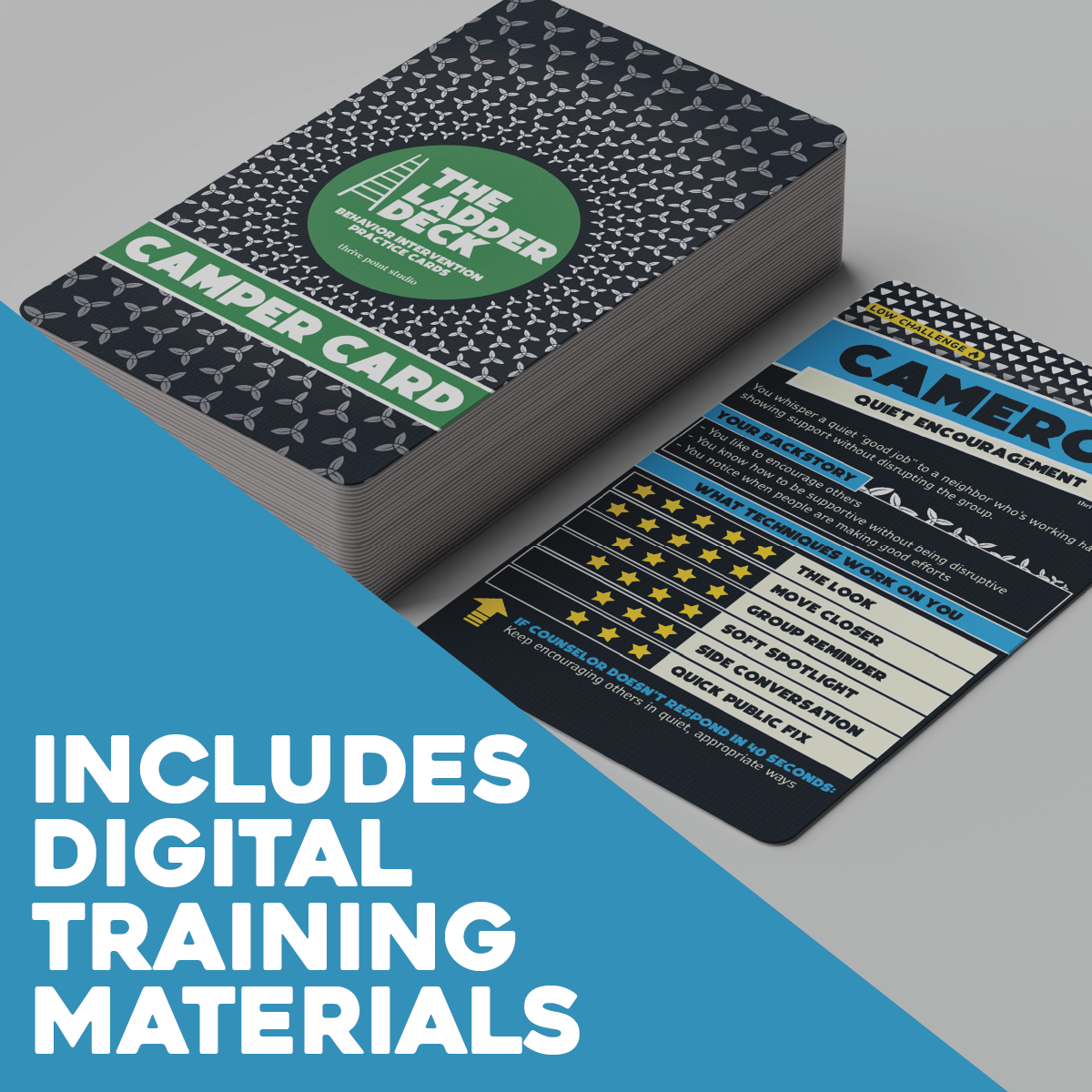
60 Camper Behavior Cards, ranging from some that only have positive behaviors to others that have a high number of challenging behavior.
10 Staff Scenario Cards to put staff in the action giving directions for common camp scenarios.
4 Observer Cards to help staff give peer feedback.
8 Explainer Cards, including all the steps of the Ladder of Action.
How it works: Staff get into groups, draw cards, and role-play giving directions to a groups of campers. Some “campers” will misbehave and staff will using the Ladder of Action to correct the behavior starting at giving a great “Teacher Stare.” It's simple, it's hands-on, and it works because they're actually doing it and not just listening to someone talk about it.
Stop Lecturing About Behavior Management.
Let Them Practice It.
The first training card deck designed to turn nervous camp counselors into confident behavior managers before the first camper arrives.
You've seen it happen.
You spend hours in staff training talking about behavior management techniques. Everyone nods along. They take notes. They seem to get it.
Then Day 3 of camp arrives. A camper is melting down in the middle of an activity. Your counselor freezes. They know the theory—they just haven't done it yet.
That's the gap this deck fills. Not another manual, a way to practice & role-play.
How to Use the Deck
Make Groups
Divide staff into groups of 6-10 people. Each group needs an Observer, a Counselor, and the rest are campers. Each person takes a role card.
Draw Cards
Give time to read their cards and prepare to fully immerse themselves in their roles.
Practice Through Play
Play several rounds, giving different staff chances to be the counselor, give feedback, and play as campers.
Types of Cards in the Deck
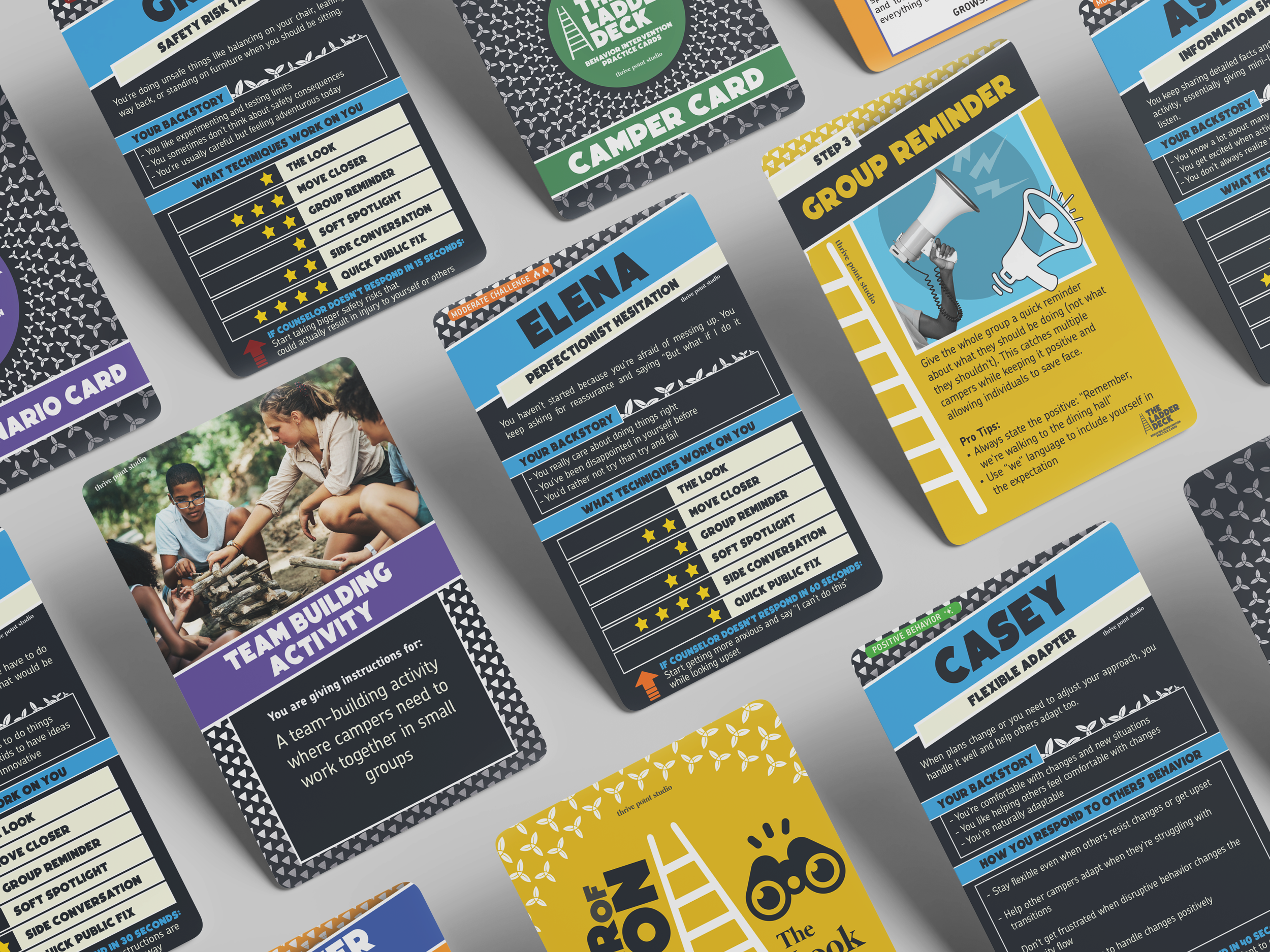
Camper Behavior Cards
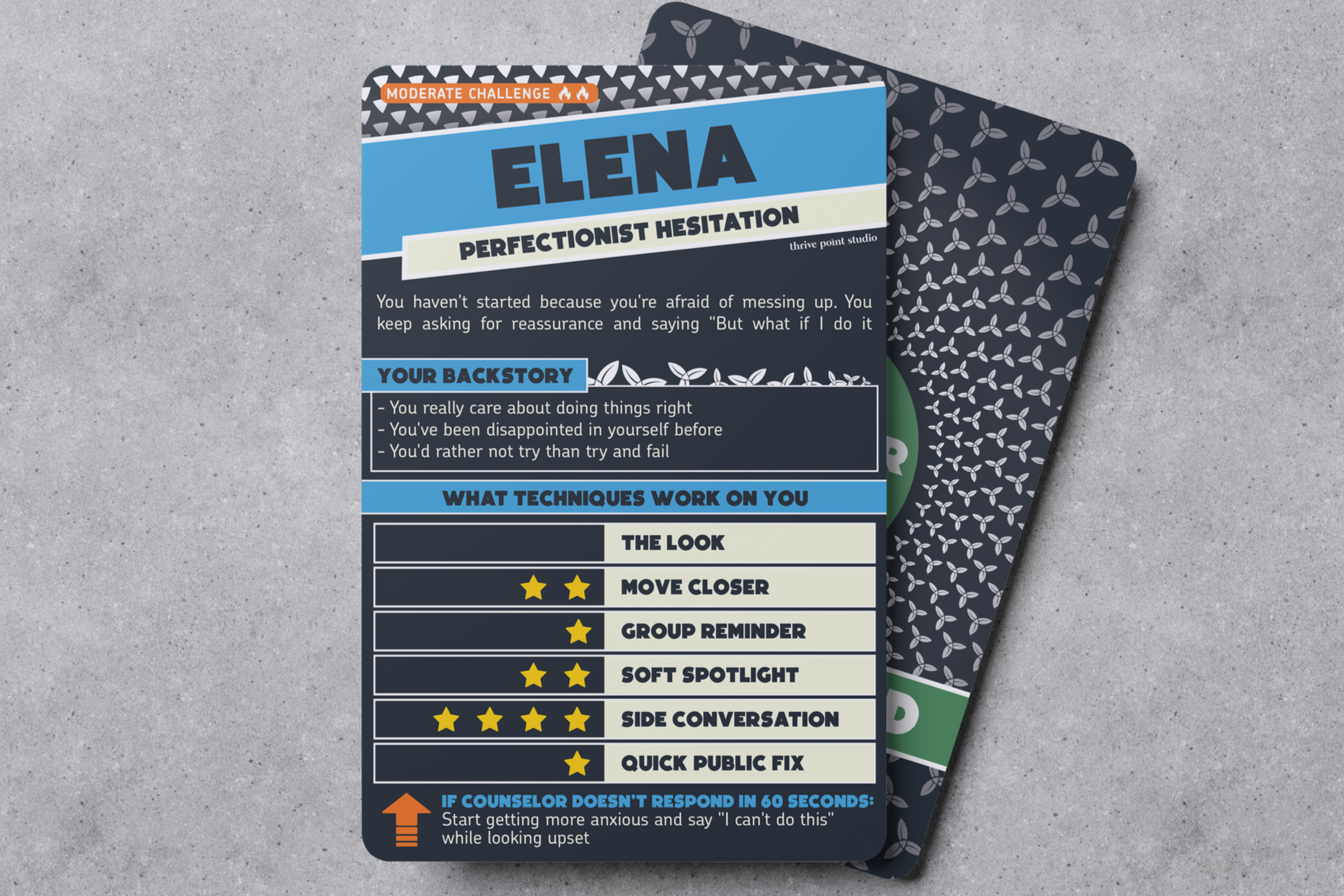
Spanning positive behaviors to high-challenge situations, each card includes:
What the camper is doing
Their backstory and motivations
Which interventions work (and which don't)
How they escalate if ignored
Each card guides a staff member how to respond to a counselor practicing the Ladder of Action techniques during practice rounds.
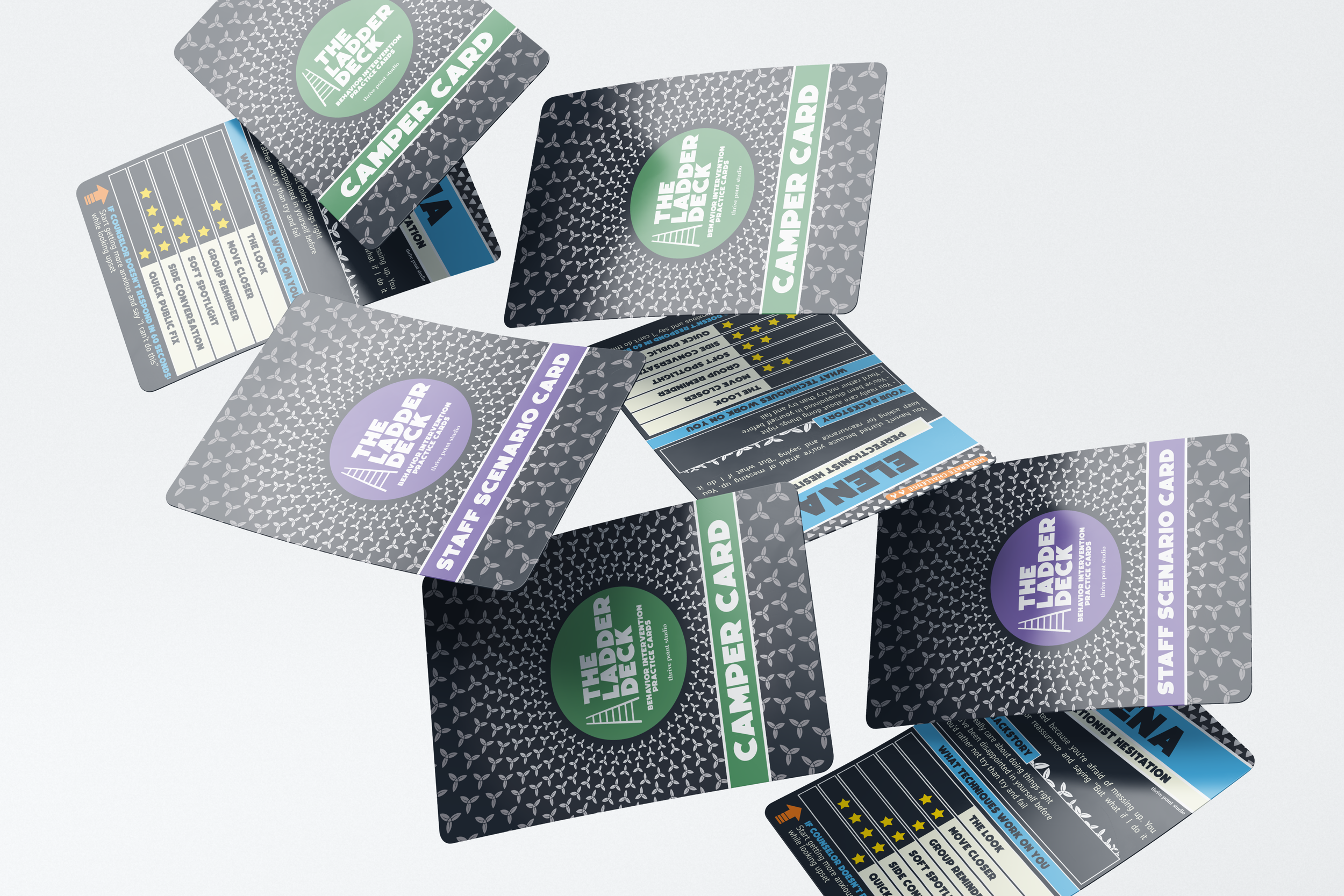
Staff Scenario Cards
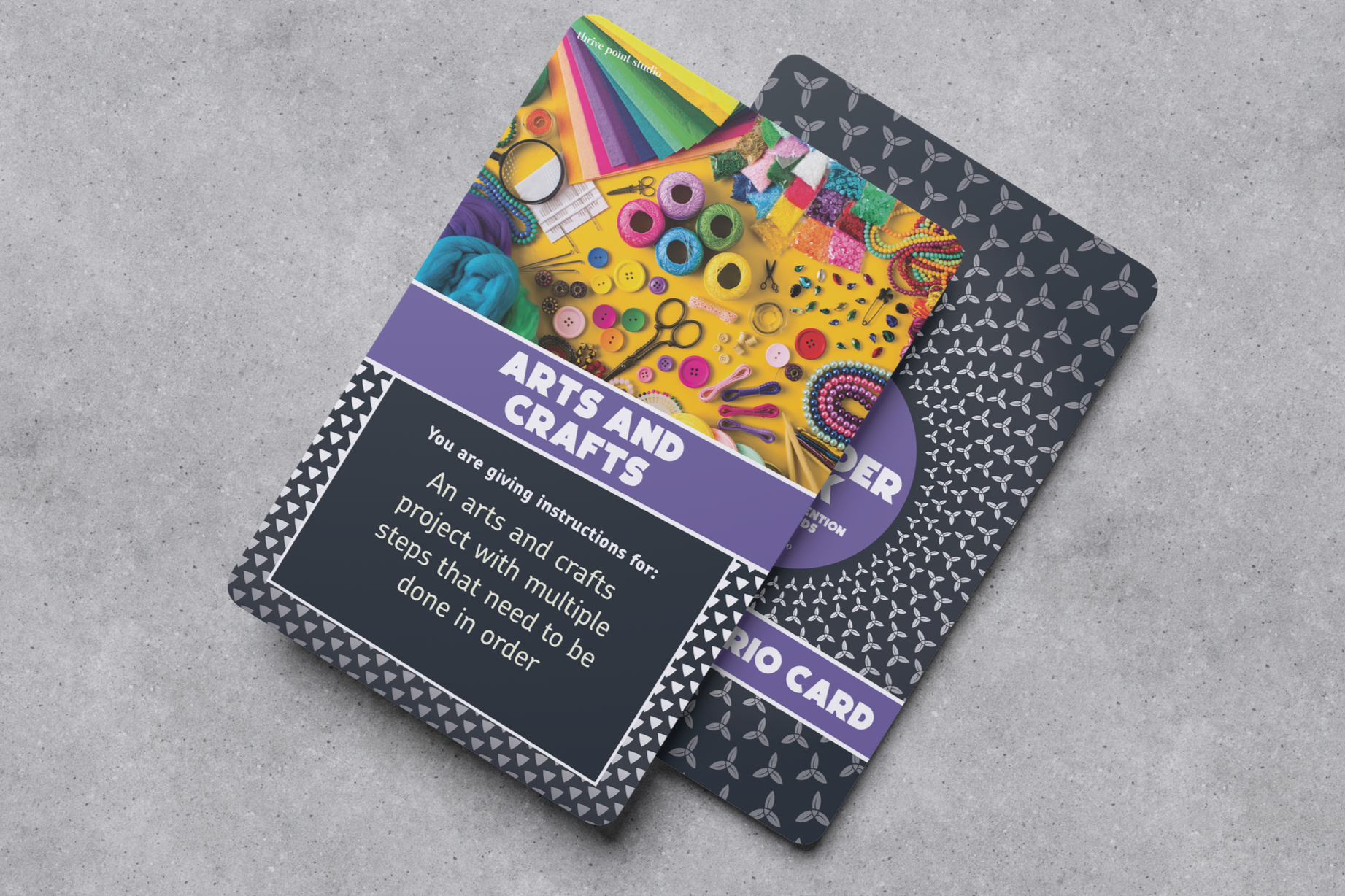
Staff practice giving instructions during real camp contexts like nature walks, arts & crafts, clean-up time, and team-building activities.
Use the cards or have staff make up their own!
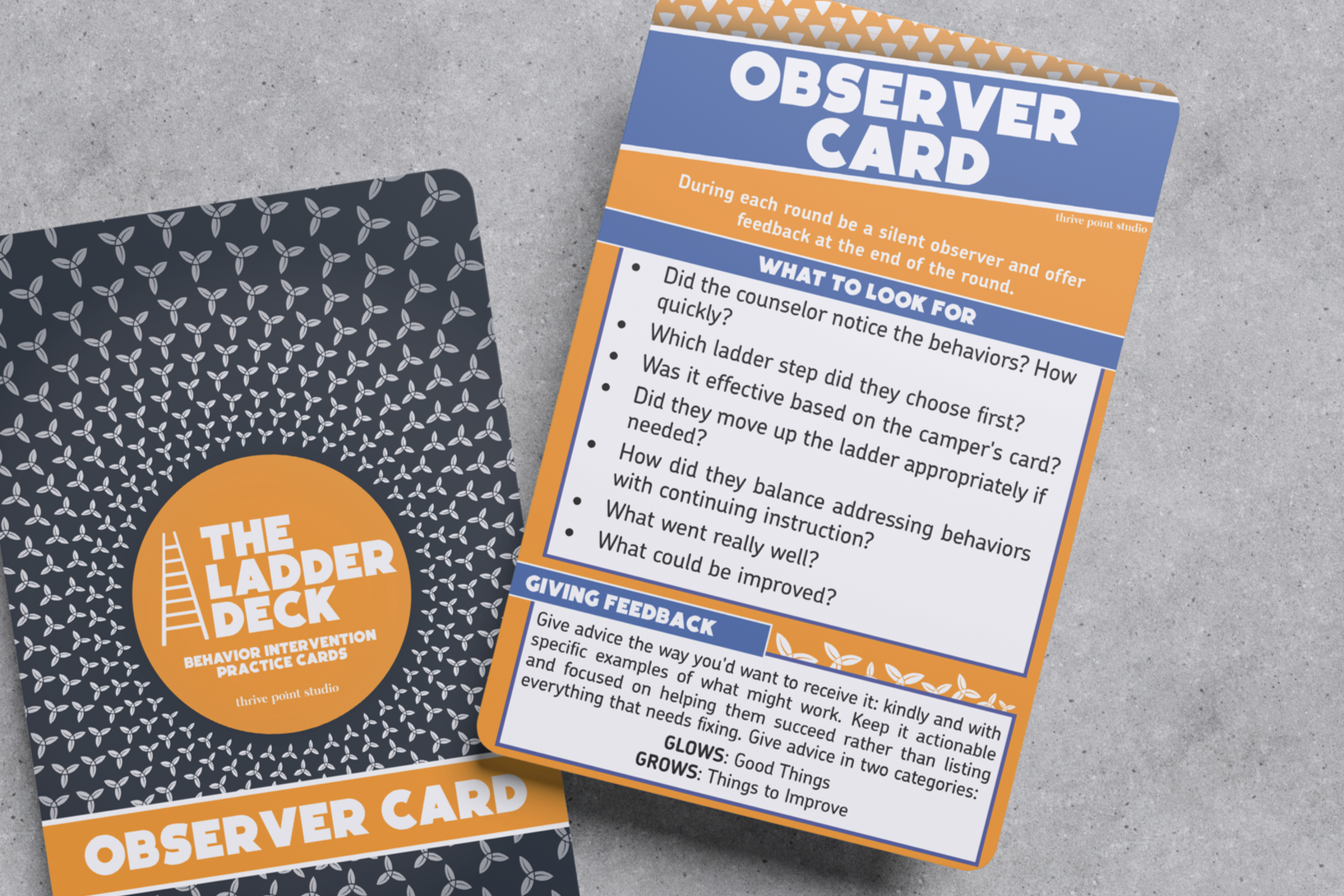
Observer Cards
Spanning positive behaviors to high-challenge situations, each card includes:
What the camper is doing
Their backstory and motivations
Which interventions work (and which don't)
How they escalate if ignored
Each card guides a staff member how to respond to a counselor practicing the Ladder of Action techniques during practice rounds.
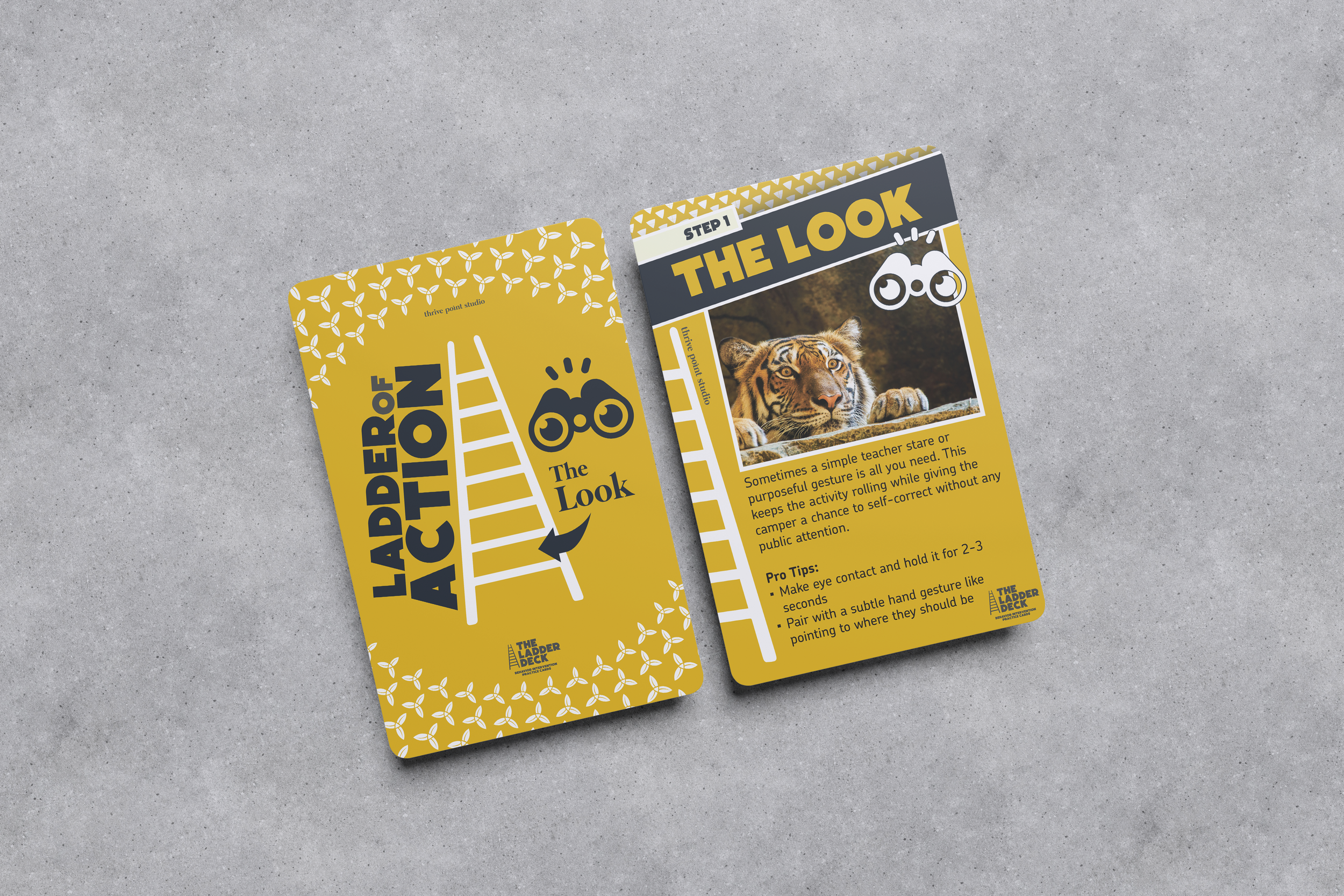
Ladder of Action Cards
Short explainers on the 6 steps staff can take to redirect behavior without yelling, including things like:
A good teacher stare - “The Look”
Stand near to the kids without calling them out - “Move Closer”
Remind everyone what they should be doing instead - “Group Reminder”
82 Training Cards
Instruction & Ladder of Action Cards
8
Staff Scenario Cards
10
Observer Cards
4
Camper Behavior Cards
60
16 Camper Positive Behavior Cards
19 Camper Low Challenge Cards
22 Camper Moderate Challenge Cards
3 Camper high Challenge Cards
The Difference
Other tools give you theory. Manuals. Lectures. PowerPoints. This gives you practice.
Like pilots in flight simulators, your staff experience high-stakes moments in a low-stakes environment. This is the only behavior management training card deck designed specifically for camp counselors and youth workers. It pushes traditional role-playing past just making others laugh and makes it realistic and useful.
No more crossed fingers.
Your staff deserve better than hoping they figure it out.
Your campers deserve counselors who've practiced, not just listened.
Give them reps, not just rules.
The Ladder of Action
So wait… what is the Ladder of Action?
The Ladder of Action gives you six simple steps to redirect behavior, starting with the least invasive approach possible. Begin at the first step with a nonverbal cue - sometimes just a look is enough. If that doesn't work, move up one rung at a time, only using what's necessary to get everyone back on track.
This approach keeps activities flowing smoothly, maintains the dignity of each camper, and preserves your energy and voice for the fun stuff. Whether you're handling a distracted camper during instructions or redirecting unsafe behavior on a hike, these techniques give you options beyond just ignoring problems or shouting.
The Look – A teacher stare of a silent gesture
Move Closer – Move closer to the camper(s) but don’t necessarily provide a correction.
Group Reminder - A quick reminder to the entire group about what they should be doing and not what they shouldn’t be doing. “As a reminder, all campers should be going to wash their hands before going to lunch.”
Soft Spotlight - Explicitly name the issue (and what to do to correct it) but keep it anonymous. “Oops, I see 4 campers who maybe forgot to wash their hands.”
Side Conversation - Give the correction quickly and privately. Often the first go to and shouldn’t be. Maintain the dignity of the camper and don’t make it a public performance or a war of egos.
Quick Public Fix - Last ditch effort. Keep it concise and keep it rolling, limiting the time other campers can notice you ever did it. A “Drive-by” and works well when combined with
The cards are designed to help staff practice choosing the right level and moving up the ladder when lower interventions don't work.
Frequently Asked Questions
-
This deck was designed specifically for camp staff trainings. It works great for summer camp counselors, afterschool program staff, recreation department employees, and anyone who works with kids in less structured environments.
-
Each round takes about 5 minutes (prep + action + debrief). A typical session runs 3-6 rounds, so plan for 20-45 minutes depending on how deep you want to go. You can easily fit this into a staff training day or use it as a quick refresher.
-
Groups of 6-10 work best. Smaller than 6 and you don't have enough "campers" for realistic group dynamics. Larger than 10 and people don't get enough turns practicing. If you have a big staff, just split into multiple groups running simultaneously.
-
Nope! The deck is designed to be self-facilitating. The How to Play card and reference cards give you everything you need. That said, if you want more in-depth behavior management training for your team, we offer workshops that pair perfectly with the cards. The deck is a great follow-up tool to keep practicing after a training session.
-
Just the cards! All the behaviors are designed to be acted out in any training room without props. The camper behaviors are universal things like physical restlessness, calling out, whispering to a neighbor, or asking repeated questions – stuff that works regardless of what "activity" the counselor is teaching.
-
The 60 camper cards are balanced across difficulty levels:
Positive behaviors (25%) – Role models, helpful assistants, enthusiastic participants
Easily managed behaviors (25%) – Minor distractions that respond to simple interventions
Moderate challenges (35%) – Behaviors that require moving up the ladderHigh challenges (15%) – Defiance, safety issues, emotional dysregulation
This mix reflects real life – most groups have a range of behaviors happening at once, and counselors need to practice triaging and responding appropriately to each.
-
Start with a returning staff member as the first Observer and a newer person as the first Counselor. Returners can model good feedback, and new folks need the most practice.
Make sure new staff get priority for the Counselor role – they're the ones who need to build confidence.
Remind "campers" they're helping the counselor practice, not trying to be impossible to manage. Be realistic but not mean!
Use the debrief questions on the reference cards to keep discussions focused and positive.
-
The cards work great as a standalone practice tool, but they're even better when paired with a full Behavior Management 101 training. We offer in-person and virtual workshops that teach the underlying techniques, and the cards become a powerful follow-up tool for continued practice. Reach out if you're interested in training for your team.
Buy Now
You do big and complicated things. Let us help.
I've trained hundreds of camp staff, and here's what I've learned: the counselors who struggle aren't the ones who don't care. They're the ones who never got a chance to practice.
Behavior Cards gives your team that practice.
What's inside:
60 Camper Behavior Cards, ranging from some that only have positive behaviors to others that have a high number of challenging behavior.
10 Staff Scenario Cards to put staff in the action giving directions for common camp scenarios.
4 Observer Cards to help staff give peer feedback.
8 Explainer Cards, including all the steps of the Ladder of Action.
How it works: Staff get into groups, draw cards, and role-play giving directions to a groups of campers. Some “campers” will misbehave and staff will using the Ladder of Action to correct the behavior starting at giving a great “Teacher Stare.” It's simple, it's hands-on, and it works because they're actually doing it and not just listening to someone talk about it.
You do big and complicated things. Let us help.
I've trained hundreds of camp staff, and here's what I've learned: the counselors who struggle aren't the ones who don't care. They're the ones who never got a chance to practice.
Behavior Cards gives your team that practice.
What's inside:
60 Camper Behavior Cards, ranging from some that only have positive behaviors to others that have a high number of challenging behavior.
10 Staff Scenario Cards to put staff in the action giving directions for common camp scenarios.
4 Observer Cards to help staff give peer feedback.
8 Explainer Cards, including all the steps of the Ladder of Action.
How it works: Staff get into groups, draw cards, and role-play giving directions to a groups of campers. Some “campers” will misbehave and staff will using the Ladder of Action to correct the behavior starting at giving a great “Teacher Stare.” It's simple, it's hands-on, and it works because they're actually doing it and not just listening to someone talk about it.
In addition to the physical deck: You’ll receive via email a slideshow with embedded timers you can use to run a practice session and 1-page handouts about the Ladder of Action to give to staff.
Future Decks

What Could Go Wrong?
A Risk Management Card Game
From sudden rainstorms to actual emergencies, this game teaches young staff how to scan, assess, and adapt through realistic scenarios with escalating complexity.

The Make It Better Game
Transform ordinary activities into extraordinary experiences
Challenge your team to remix classic camp activities using constraint cards and creative modifiers—then make each other's ideas even better!