Review of Boys of Summer: This is Timberlake
This review is for all the TL’ers, particularly the ones who were there on the journey with me.
I spent five years as the director of Camp Timberlake, finishing up after the summer of 2024. Boys of Summer was filmed the summer before that, in 2023, when NPR came to TL for the second half of the summer. I recently flew out for the world premiere in Missoula, Montana. It took place in a small sold-out art space. I had an extra ticket I gave to a woman in line who came to see Boys of Summer because she heard an interview on the radio. It was the last short in the line-up and when we finally got to those first sweeping shots of Timberlake I already started to feel all the feels. The film was magnificent. It was a coda for the work. For the years. For everything we built together. To the surprise to no one who knows me, I cried four times. First tears legit came 60 seconds into it.
NPR had been looking for months for the right camp. They wanted to explore the male loneliness epidemic, the very real, very documented crisis of boys and men who don’t know how to be close to each other, who had lost the language of friendship and vulnerably. The team from NPR wern’t looking to make something heavy or full of lectures from talking heads. They wanted to find a place that was actually doing something about it, where the answer looked like summer and felt like joy. They reached out, we talked, and somewhere in the rounds of conversations I apparently said enough of the right things that TL became that place.
A lot of us were nervous about it. Some of us were very nervous about it.
There were a lot of questions and wonderings. Could we trust them to show TL to the world? What would it mean to have strangers in our community with cameras, during chores, during beading, during the quiet sacred moments we struggle to explain to outsiders? Would it distract from simply having a great summer? Those were very real questions and we and the NPR team sat with them seriously. What helped was that the team from NPR made a genuine effort to be with our community without cameras. Mito Habe-Evans, Annabel Edwards, Tsering Bista, and Nickolai Hammar understood they were guests inside something that mattered to a lot of people. That trust was built slowly as they came to songs, sat in on trainings, jumping in on chores, and just existed in the space.
It was a risk, for sure. After seeing Boys of Summer, I feel it was so worth it.
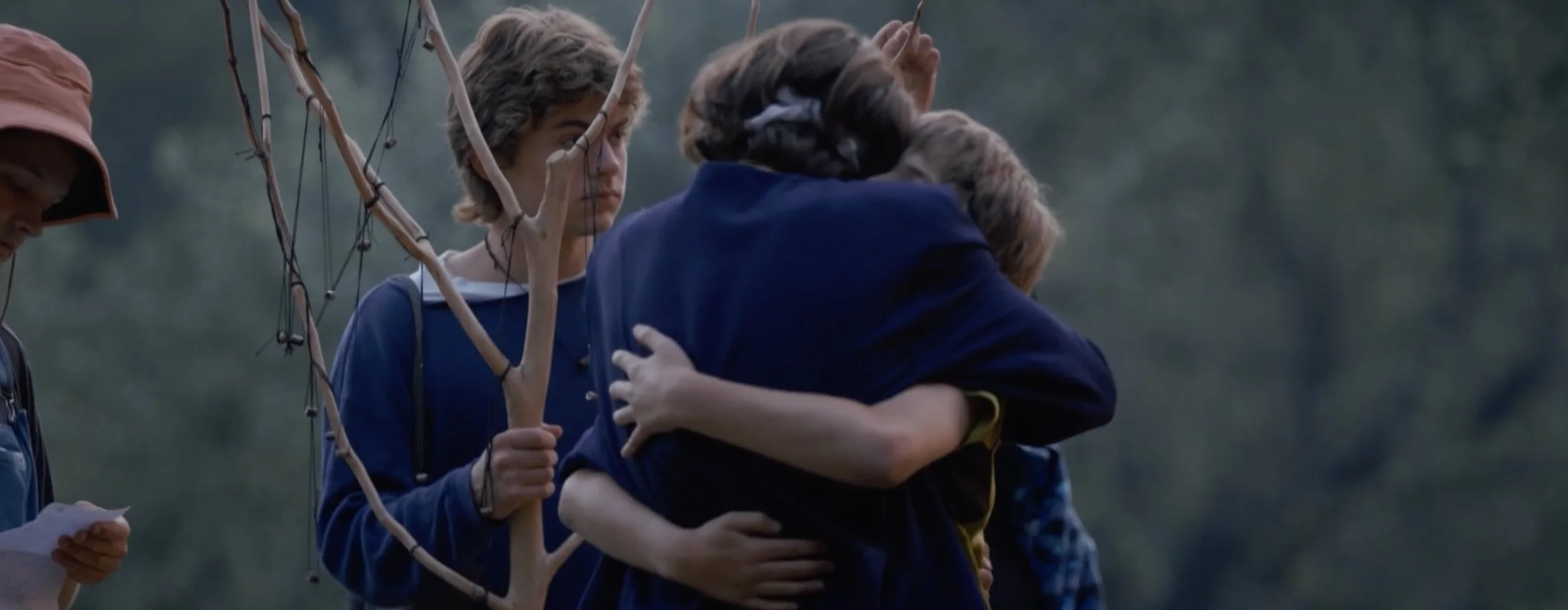
They didn’t create a think piece or a news segment. They created a film, a love letter to TL. We stay with the campers in Rangers cabin and see them just exist. No one is explaining camp to the audience while they watch it. As the film progresses a couple campers come into focus more and we follow their journey as they each overcome something over the course of the summer. It doesn’t editorialize, it doesn’t comment, it just trusts TL to be… TL. You’ll see counselor Zach giving a camper the patient and unhurried encouragement that you all have given or received at TL. You don’t need someone telling you what you’re looking at, you already know. You’ve seen it. You’ve done it. Someone did it for you. At TL.
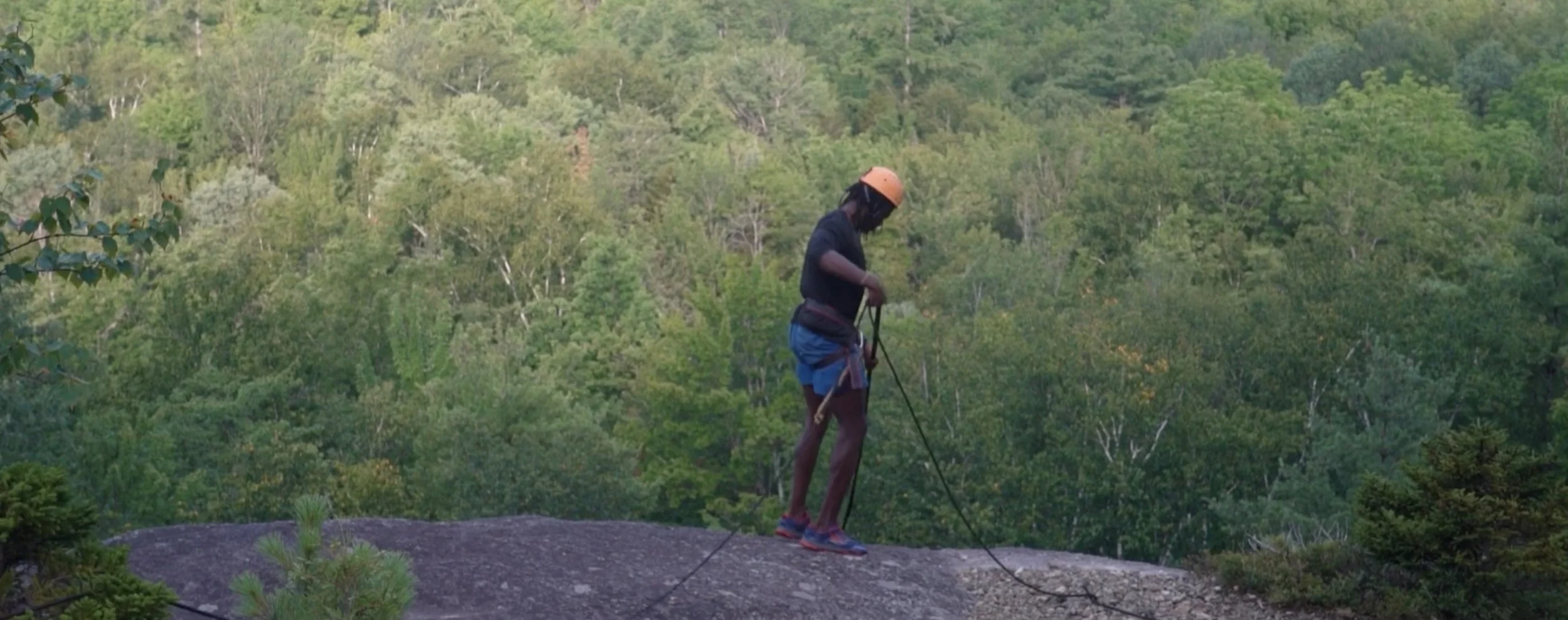
The film felt like coming home. The cabin contract the first evening, quiet and grounded, with Senior Lodge Head CJ walking through to collect contraband and tossing an offhanded “Okay goodbye I love you” on his way out without breaking stride. After the film an audience member came up to me about that scene, unprompted, to marvel at that expression of love so normalized.
The birthday clap made it, pounding on tables and all. Pierce gives a completely unfiltered take on his second session cabin versus first session and it’s very… Pierce. Wolf says some amazingly profound things, and it’s very… Wolf. There’s a thumbtack scene the audience loved and was so middle school nonsensical. Rangers receives contraband in the mail delivered in a very “camp” sort of way. The Discotech banquet makes it in. The drone shots over the valley are so beautiful I want them as a screensaver permanently. The beading scenes are gorgeous and you can actually hear what’s being said.
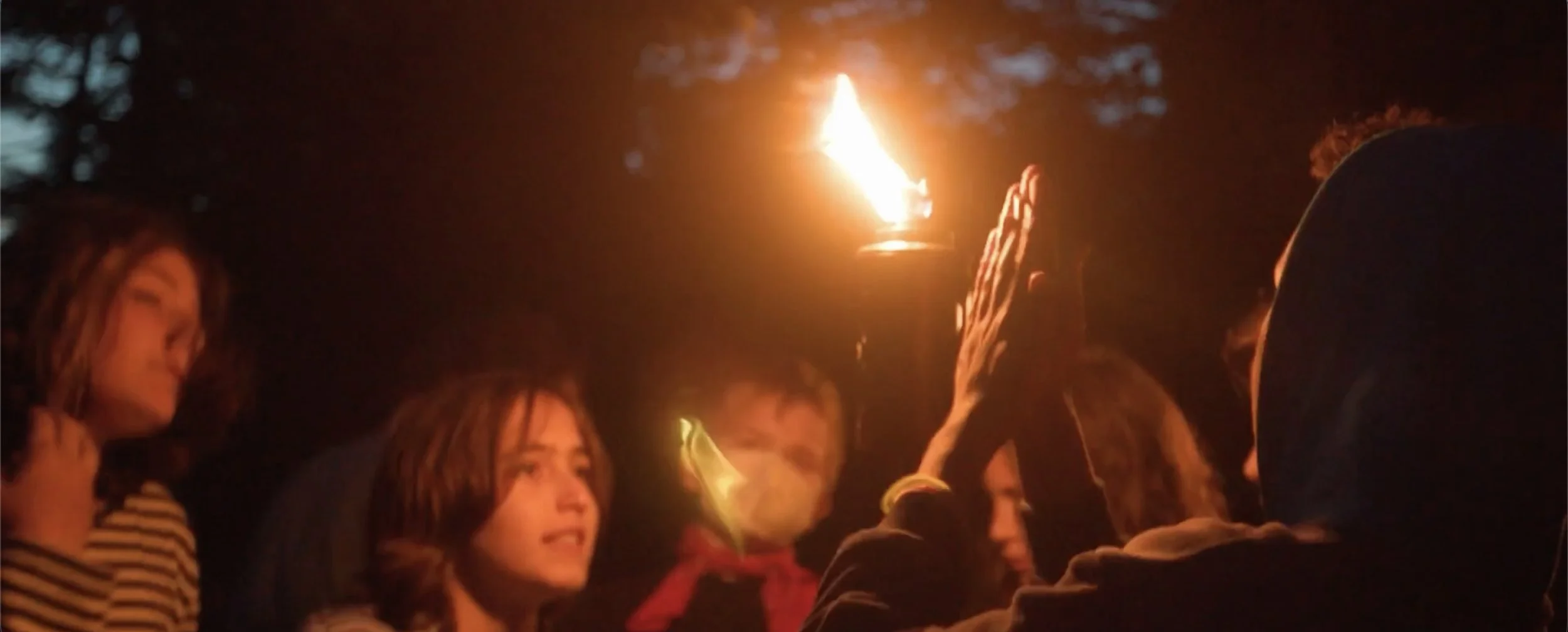
Some things didn’t make the final cut. Camp dog Atlas didn’t make a single scene. The directors knew she would have stolen the whole movie, obviously. The final candlelight ceremony doesn’t make it. Some particular moments from that summer didn’t make it, the ones best not to think about too much. You know them. The team told me the first cut was over an hour and had so much in it. More campers, more staff, more climbing, more of my talking head. What remains is leaner and frankly truer. The film belongs to the kids, our campers, and every single editing decision reflects that.
For years I tried to explain what makes TL different from other camps. I tried to explain how life changing Timberlake is. I gave the speeches. I wrote the newsletters. I stood at departure and watched families drive away and hoped they understood what they were leaving with. The film does in 30 minutes what I never quite managed to do in words. It just shows you. I don’t have to explain it anymore. When someone asks me what TL is, what it does, why it matters, I’m just going to say: watch Boys of Summer.
After the screening person after person came up to me, to ask questions, to marvel at the staff, to giggle about the camper moments. They were grateful that TL exists, grateful for what we built, grateful that someone captured it on film and put it in front of the world. I want TL’ers to feel that too, because TL’ers built it with me. Every counselor who sat with a kid through a hard moment, every camper who showed up and let themselves be seen, every staff member who did the tough work on a day when it would have been easier not to care. That’s what’s on that screen. That’s what people were responding to.
I hope the message of TL gets out there. I hope to work with NPR to take it to conferences and screenings, to share what we did and how others can make more intentional spaces for boys and non-binary campers. To get the message that boyhood can be something different, that we must do better in raising our boys. To show that TL is built on the many rituals and systems that make sure each boy is seen and championed. Timberlake is profoundly sacred and unique and has lessons to teach others.
Watching this film on the other side of my Timberlake experience, I felt the weight of everything from that summer. I also felt the clarity that in the end, it was magical and worth it. That the kids felt that magic even in the moments we weren’t sure they did. Boys of Summer is both for everyone who has ever been a part of Timberlake across all generations and is a record of a particular slice of that history. A record of a summer that asked a great deal of so many of us. Of kids who climbed high and swam far and made new friends and built fires and counselors who never doubted they would. A record of no martyrs and no saviors. A record of when anything was possible, everybody counted, and we got it done.
Underneath all of it, the original score and gorgeous cinematography and the moments that will make you feel feels, is that boyish irreverence. The pure chaotic hilarious energy of a bunch of mostly boys just living together in cabins with missing walls. Timberlake has always been about balance, the silly and the sacred sitting right next to each other, jostling for attention. The film gets that exactly right. In the middle of a real and growing epidemic of male loneliness, this feels like more than just a great summer camp movie. It’s evidence, it’s proof the antidote has always existed, quiet and determined, raucous and daring, tucked away in a valley in Vermont. Proof we were there, we existed, we built, together. We were TL’ers.
You have to see it. Be prepared for the feels.
Timberlake Camp magic is real, ya’ll. They made a movie that proves it.
Media & Whatnot:
You can see the full documentary online, but only from February 18th - 26th. From there we don’t know where it might get picked up.
I highly recommend this great interview with the directors.
And, if you’d like to walk down memory lane from summer 2023, check out the Summer in Rewind 2023
From NPR:
Boys of Summer follows a group of teenage boys at a remote summer camp in the Vermont woods as they embark on a journey of emotional growth. Free from screens and societal expectations, they learn to open up, support one another, and redefine what it means to be a boy.
The NPR Studios original documentary is a tender vérité portrait of vulnerability, friendship, and the quiet rebellion of feeling deeply in a world that often tells boys not to.